
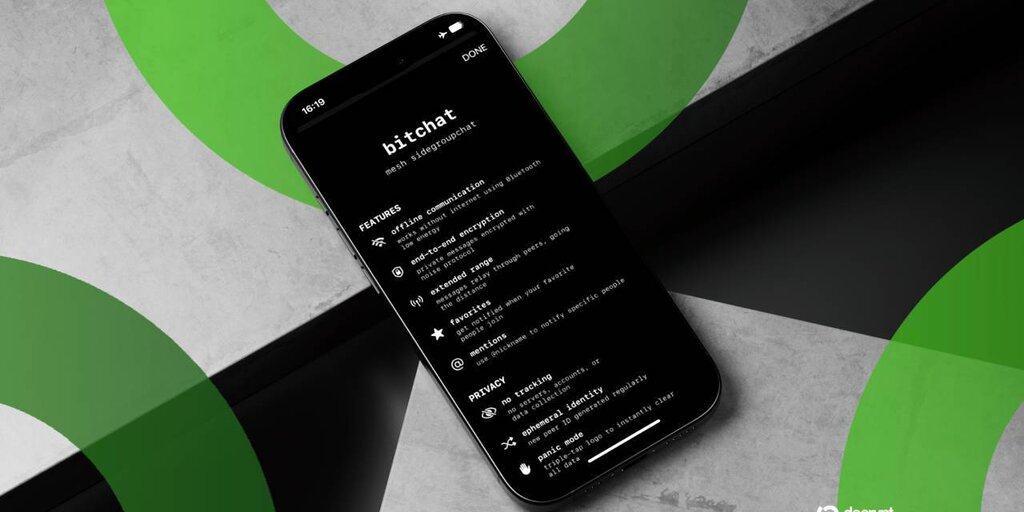

Apple has removed Bitchat, a decentralized messaging application created by Block CEO Jack Dorsey, from its China App Store following a request from Chinese authorities. Dorsey disclosed the removal in a post on Sunday. The action was taken at the direction of the Cyberspace Administration of China, the country’s top internet regulator.
Chinese regulators argued that Bitchat violated rules governing internet-based information services with attributes related to public opinion or social mobilization. The provision in question stems from 2018 regulations that require apps to undergo security assessments before launching. Bitchat’s peer-to-peer architecture, which operates over Bluetooth and mesh networks without requiring internet connectivity, presents particular challenges to China’s digital surveillance infrastructure.
The removal comes as Bitchat has been gaining significant global traction. The app has surpassed three million total downloads across platforms, with more than 83,000 downloads recorded in the past week alone. Its Apple TestFlight version had already reached its 10,000-user capacity prior to the Chinese removal, while the Google Play Store version has separately accumulated more than one million downloads.
Bitchat has emerged as a communication tool during protests and periods of restricted internet access in several countries, including Madagascar, Uganda, Iran, Nepal, and Indonesia. Its mesh networking design allows messages to travel between devices without relying on central servers or internet infrastructure. This makes the app particularly useful during government-imposed connectivity blackouts, where conventional messaging platforms become inaccessible.
The ban reflects a broader effort by Beijing to maintain oversight of digital communications within its borders. China’s dominant messaging platform WeChat serves approximately 1.34 billion monthly active users from a national population exceeding 1.4 billion, and operates under strict government content moderation requirements. Bitchat’s decentralized structure is specifically designed to function outside such centralized oversight frameworks.
This is not the first time Chinese authorities have moved against a decentralized platform associated with Dorsey. In 2023, China banned Damus, a decentralized alternative to Twitter built on the Nostr protocol that Dorsey has publicly supported. Authorities cited similar concerns at the time about communication channels that operate beyond government monitoring. The two removals together suggest a consistent regulatory posture toward decentralized applications that resist state oversight.
Originally reported by Decrypt.