
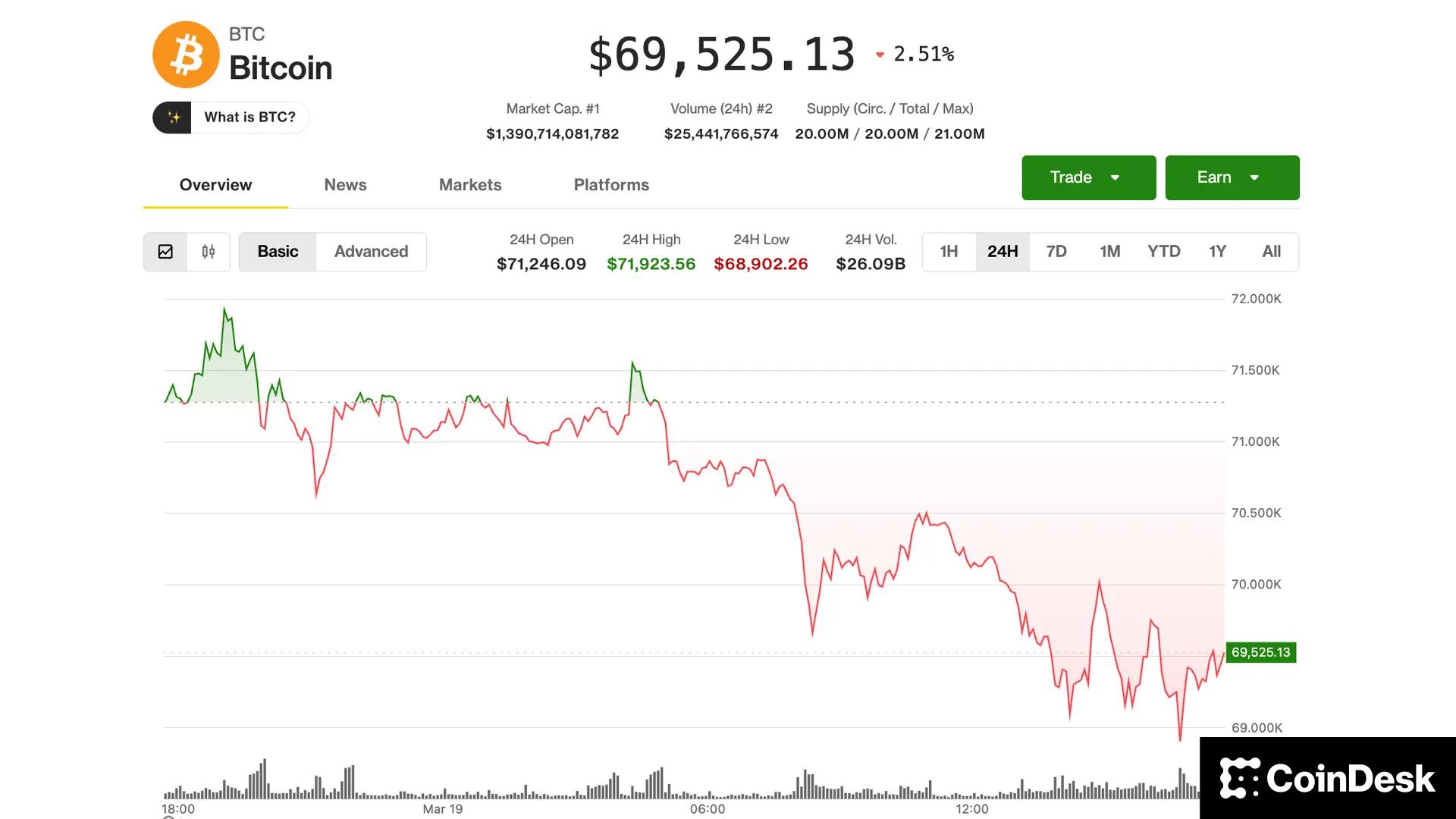

Bitcoin declined to $69,000 amid rising geopolitical tensions in the Middle East, yet the cryptocurrency demonstrated relative resilience compared to many traditional assets. Attacks on energy infrastructure added to broader market unease, sending ripples across global financial markets. The digital asset’s performance stood in contrast to sharp declines seen elsewhere.
Oil prices surged back toward $100 a barrel, reigniting concerns about persistent inflation. The rally in crude prompted renewed speculation that central banks could maintain elevated interest rates for an extended period. Higher-for-longer rate expectations have historically weighed on risk assets across multiple markets.
Precious metals bore the brunt of the market turbulence, with gold and silver falling to their lowest levels since early February. The decline was notable given that gold is traditionally viewed as a safe-haven asset during periods of geopolitical stress. The simultaneous drop in both metals reflected the complexity of the current market environment.
Wintermute trader Bryan Tan noted that Bitcoin has outperformed gold since the onset of the Iran conflict. However, Tan cautioned that the failure to sustain gains above $75,000 signals that investors should approach dip buying with care. The lack of follow-through at higher price levels suggests underlying uncertainty remains in the market.
The interplay between energy prices, inflation expectations, and digital assets continues to shape investor sentiment. Rising oil costs feed directly into inflation data, which in turn influences central bank policy decisions. Market participants are closely watching how these dynamics evolve in the weeks ahead as geopolitical developments remain fluid.
Originally reported by CoinDesk.