
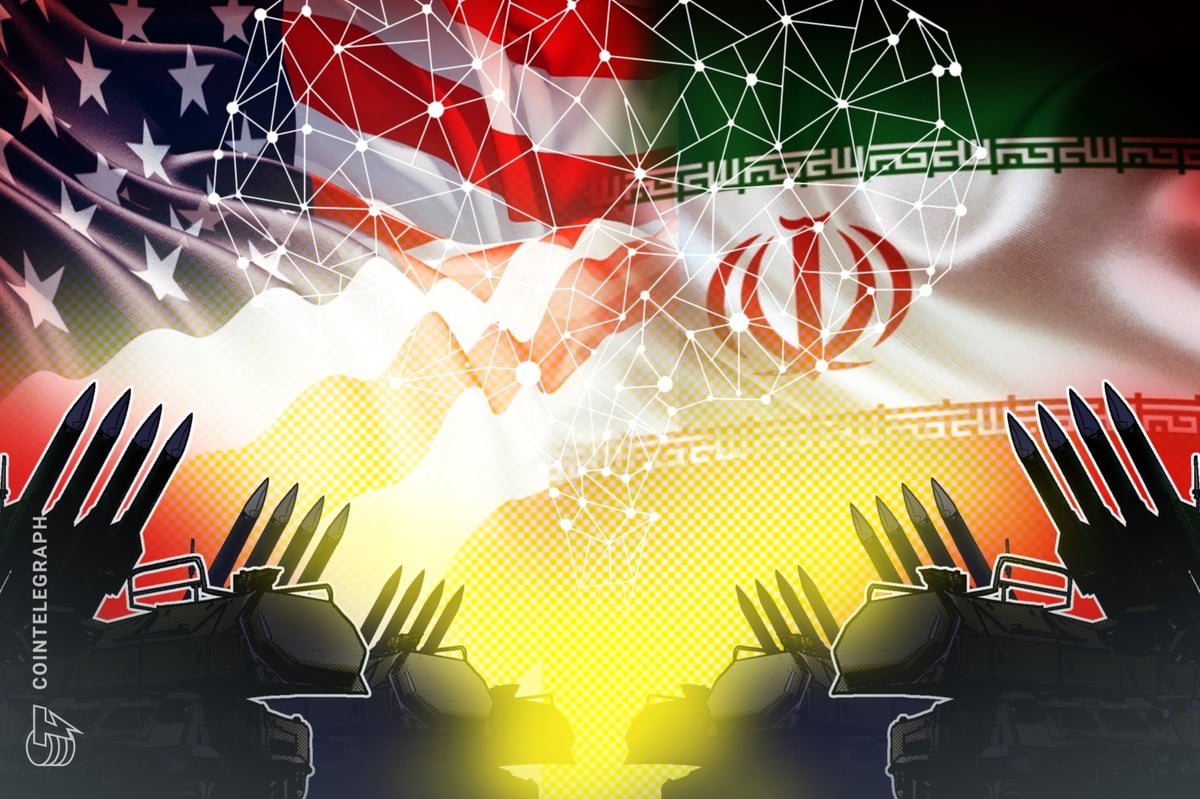

Prediction markets are increasingly being used by professional trading desks to assess geopolitical risk in real time, with platforms such as Polymarket and Kalshi repricing odds on US involvement in the Iran conflict as events unfolded. The shifts occurred as President Donald Trump combined new threats with signals of potential negotiations on Sunday. Bitcoin responded by rising more than 3.5% on Monday, reflecting the market’s sensitivity to geopolitical developments. The episode highlighted how prediction markets have moved well beyond their earlier status as a peripheral curiosity.
According to Sygnum Bank chief investment officer Fabian Dori, professional desks are now treating these platforms as meaningful macro indicators rather than retail speculation. He told Cointelegraph that prediction markets price specific, named outcomes using real capital, making them a fundamentally different kind of signal. For crypto markets in particular, where price action is frequently driven by binary events such as regulatory decisions, protocol upgrades, and geopolitical developments, that distinction carries significant weight. Dori noted that de-escalation odds shifted on prediction platforms before mainstream financial media coverage caught up, and that this movement had a direct correlation with Bitcoin’s price.
On some professional trading desks, prediction markets are now monitored alongside funding rates, options surfaces, and order flows during fast-moving geopolitical situations. ARK Invest has integrated Kalshi’s prediction market data into its investment process, illustrating how event-based odds are entering mainstream institutional workflows. In a regulated context, these markets function as a framing tool, helping teams structure risk scenarios rather than serving as direct buy or sell signals. Dori described the goal as deciding on a course of action before an event occurs, making continuously updated, capital-weighted probabilities of war, sanctions, or ceasefire a natural analytical fit.
The scale of activity in prediction markets has grown to a point where institutional investors can no longer treat the data as background noise. In March, the number of prediction market transactions reached approximately 191 million, representing a year-on-year increase of 2,838%. Monthly notional volume rose to roughly $23.9 billion during the same period. These figures suggest a structural shift in how market participants are engaging with event-driven risk.
Traditional financial institutions are also taking notice. Intercontinental Exchange, the parent company of the New York Stock Exchange, completed a $600 million investment in Polymarket on March 27, signaling strong conviction in the sector’s long-term relevance. Dori stated that prediction markets are no longer a niche product, and that the central question for professional investors has shifted from whether to monitor these platforms to how to integrate them in a way that adds genuine analytical value rather than simply introducing a new source of noise.
The rapid growth of the sector has also attracted scrutiny over fairness and market integrity. Six Polymarket traders collectively earned around $1 million by betting on the timing of US strikes on Iran in late February, raising concerns about potential insider trading. Separately, the platform removed a market related to a missing US pilot following public backlash over the associated wagers. These incidents are prompting broader questions about oversight and the ethical boundaries of event-based speculation as the industry matures.
Originally reported by CoinTelegraph.